Why visit an expert for dental implants?
Dental implant treatment is not simply about placing an implant. Careful diagnosis and planning are essential to determine the right implant position, assess the available bone and soft tissues, and consider how the final tooth or teeth will look and function.
Dr Pedram Negahban has many years of experience in implant dentistry and advanced implant procedures, including bone grafting, sinus lift surgery, immediate implant placement and complex full-mouth rehabilitation. His approach is to plan each case individually, with an emphasis on predictable outcomes and the long-term health and function of the implant.
We also have experience working with a wide range of established dental implant systems. This can be particularly helpful for patients who have previously had implant treatment elsewhere and require assessment, maintenance or further treatment.
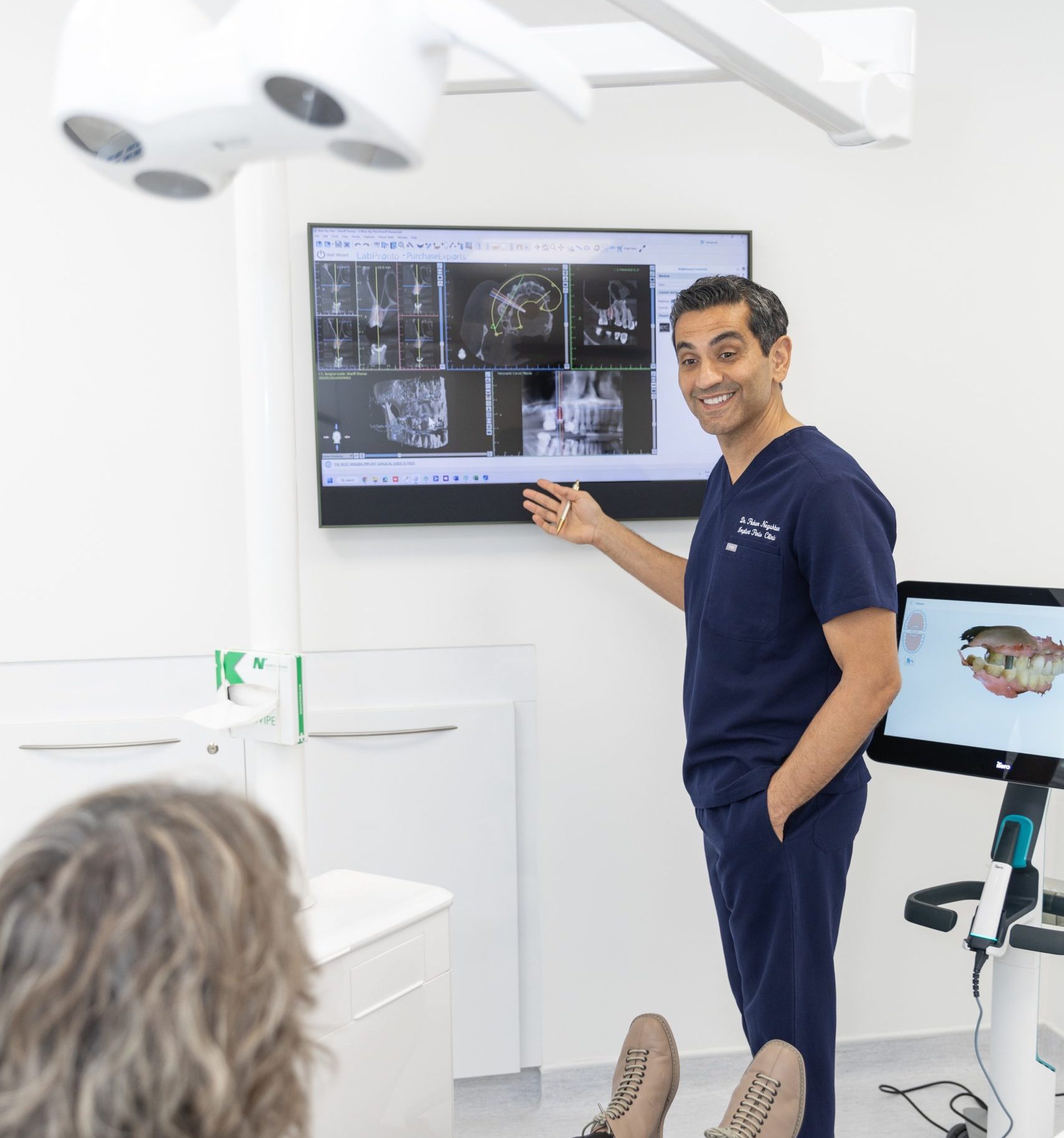
What are dental implants?
Dental implants replace the roots of missing teeth and can be used to support a single crown, a bridge or a full set of replacement teeth.
Most dental implants are made from titanium and are placed into the jawbone, where they gradually integrate with the surrounding bone during healing. This process is known as osseointegration.
At Implant & Perio, we also offer zirconia dental implants for selected patients who are looking for a metal-free alternative. Dr Negahban will discuss the different options with you and advise which implant material and treatment approach is most appropriate for your individual case.
The position of an implant is carefully planned with the final tooth in mind, taking into consideration the available bone, gum tissues, bite, and the appearance and function of the final restoration.
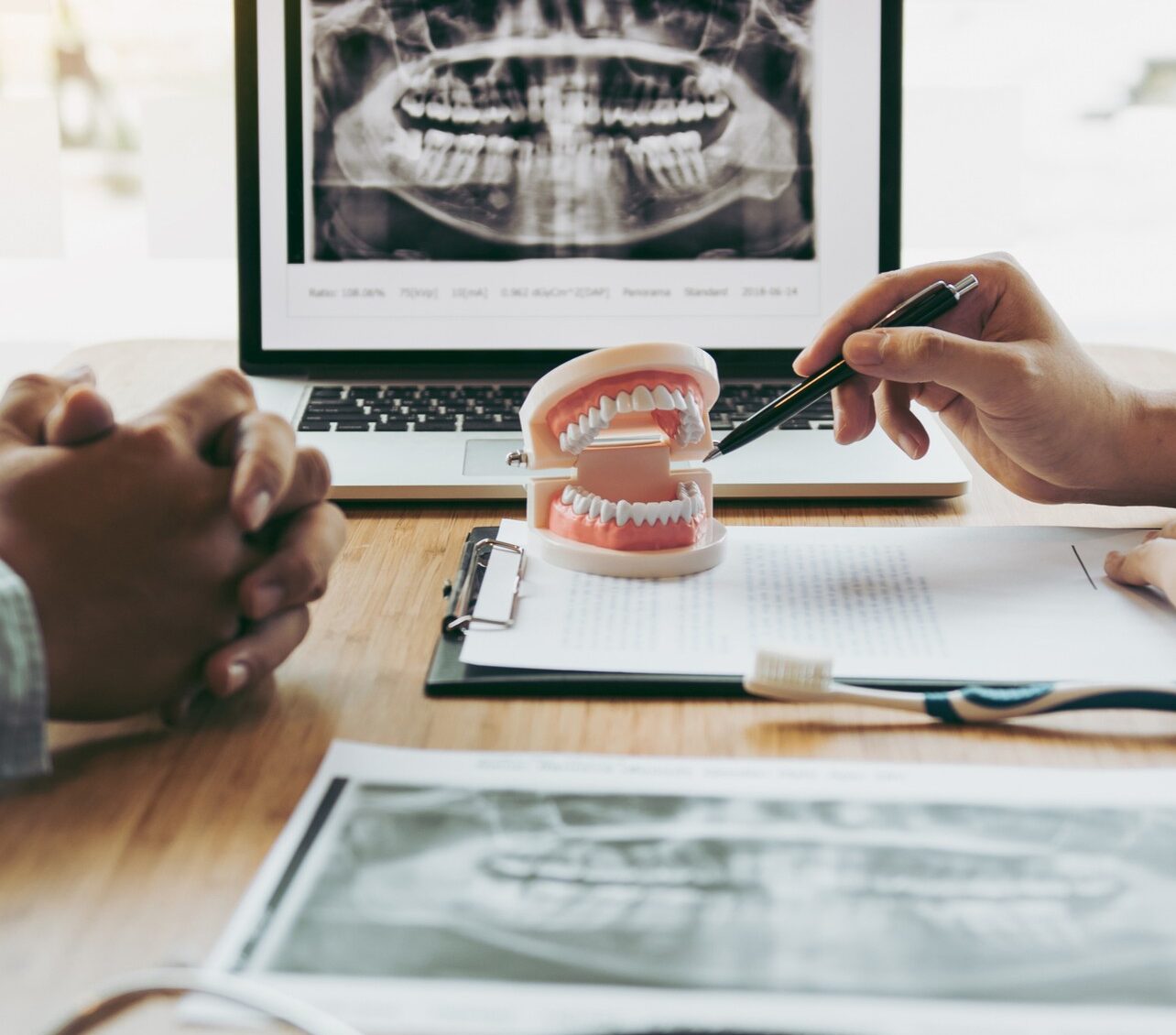











Benefits of dental implants
For many patients, dental implants are a very good way of replacing missing teeth because they allow us to replace the tooth without relying on neighbouring teeth for support.
Secure
They can be used to replace a single tooth, several teeth or, when needed, a complete arch. Once restored, the aim is for the teeth to feel secure and comfortable and to look as natural as possible.
Restorative
It sits within the jawbone. After a tooth is lost, the bone in that area can gradually reduce. An implant can help maintain the bone around the implant site allowing for natural aging over time.
Minimally damaging
When we replace a single missing tooth with an implant, we can also often avoid preparing the neighbouring teeth for a bridge.
Long-lasting
Dental implants are a long-term treatment but still need care. Good home cleaning, regular hygiene appointments, and implant reviews help keep your implant, gums, and surrounding bone healthy.
Spread the cost of your dental implants
Are you interested in dental implants and wondering about the best way to pay? At Implant & Perio Clinic, we can help! We are pleased to offer a range of payment options, giving you the chance to spread the total cost of your implants into affordable monthly instalments, subject to suitability.
Get in touch to find out more.
What are dental implants?
Dental implants offer a strong, durable, and very aesthetic solution for one or more missing teeth. They are held in place by your jawbone, becoming a stable and secure restoration that enables you to regain the look, feel, and function of natural teeth.
Dental implants are artificial tooth roots that are surgically placed into your jaw. They are made from titanium, a biocompatible material that fuses with the surrounding jawbone to become a solid and durable foundation for replacement teeth on top. We can use dental implants to replace a single missing tooth, multiple teeth in any part of your mouth, and even all your upper or lower teeth.
What does dental implant treatment involve?

Consultation
Your first appointment is about listening to you and understanding what you would like to achieve, before we consider the most appropriate treatment options. Dr Negahban will examine your teeth, gums and bite, discuss your dental and medical history, and carefully assess the area where an implant is being considered. Any existing X-rays or previous implant treatment can also be reviewed.
He will then talk you through the possible treatment options and explain whether any further investigations or 3D imaging are needed before your treatment plan is finalised.
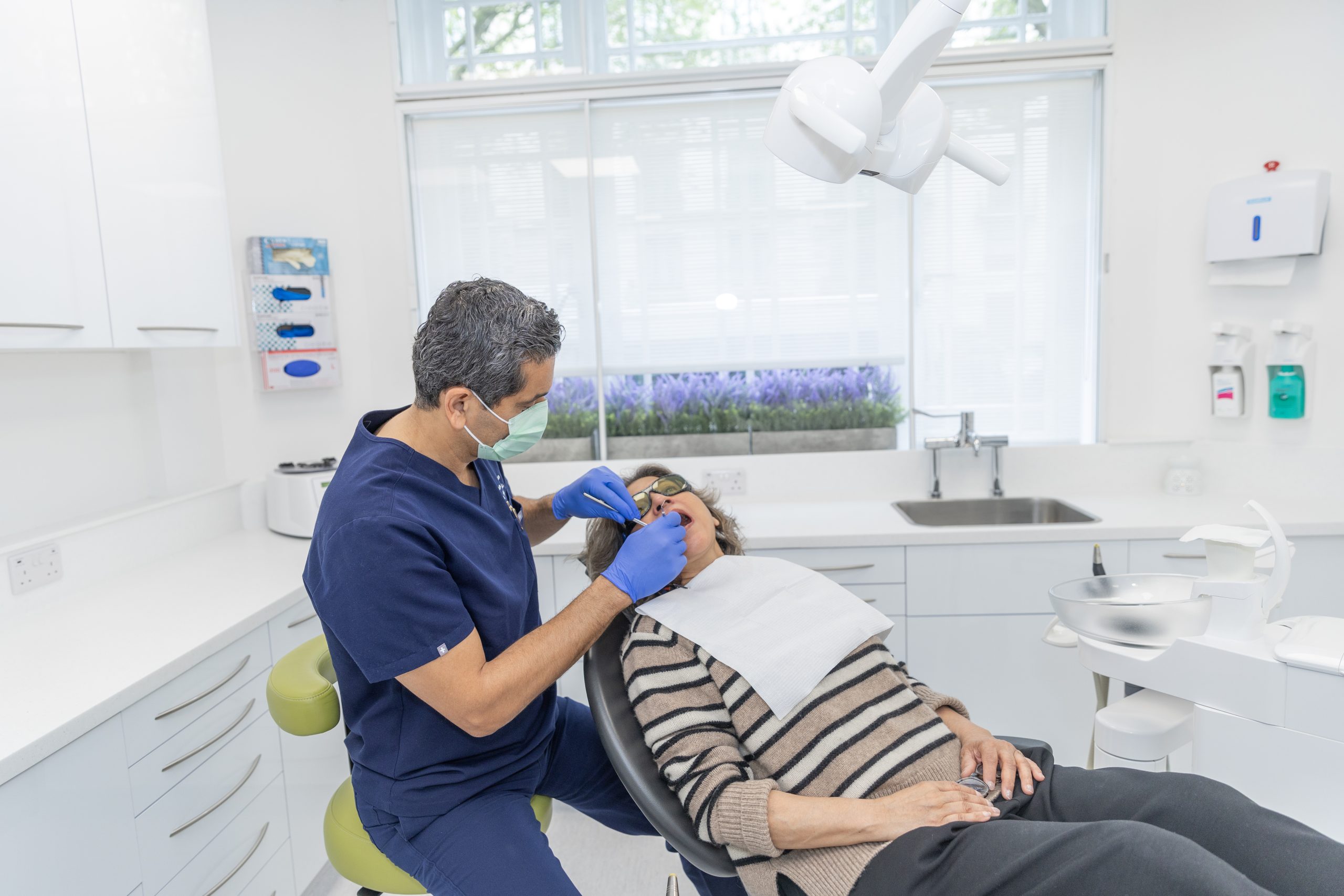
Planning and preparation
Once we understand what you would like to achieve, we can plan the treatment in more detail. Where needed, this may include 3D imaging to assess the available bone and surrounding anatomy. We also consider the position of the final tooth or teeth, your bite, and the condition of the gums and soft tissues.
If there is not enough bone to support the implant in the planned position, additional treatment such as bone grafting or a sinus lift may be needed. Where possible, this can sometimes be carried out at the same time as implant placement; in other cases, it is better to treat the area first and allow it to heal. Dr Negahban will explain the proposed treatment, the different stages involved and the expected timescale before treatment begins.
Implant placement
The implant is placed into the carefully planned position in the jawbone. If a tooth needs to be removed, it may be possible to remove the tooth and place the implant at the same appointment. Where additional procedures such as bone grafting or a sinus lift are required, these may sometimes be carried out at the same appointment as implant placement. In other cases, it is better to carry them out first and allow the area to heal.
If the implant is stable and the conditions are right, we may also be able to provide a temporary tooth on the same day. If not, we allow the implant to heal before it is restored. The implant then needs time to integrate with the surrounding bone before the final restoration is fitted.

Your final restoration
Once the implant has healed and integrated with the bone, we can move on to the final tooth or teeth. The final crown, bridge or implant-supported restoration is made to fit your mouth and your bite, with careful attention to both function and appearance.
Once fitted, we will show you how to look after your implant properly. Maintaining good oral hygiene is an important part of the long-term care of dental implants. Regular hygiene appointments and implant reviews allow us to monitor the implant, the surrounding gum and bone, and the restoration over time.
Frequently Asked Questions
Dental implants are designed to provide a long-term solution for missing teeth. Their longevity varies depending on individual clinical circumstances, oral health, maintenance and other factors. As with natural teeth, complications can occur, and no specific lifespan can be guaranteed.
The crown or bridge attached to the implant may also need repairing or replacing over time. Regular hygiene appointments and implant reviews are important, even when everything feels perfectly fine.
Looking after an implant is not very different from looking after your natural teeth, although cleaning around it may require a slightly different technique.
We’ll show you how to clean around your implant properly and which brushes or cleaning aids are most suitable. Regular hygiene appointments are important because inflammation around implants can develop without obvious symptoms in the early stages.
One of the main advantages of a dental implant is that we can replace a missing tooth without having to prepare the neighbouring teeth for a bridge.
Implants can replace one tooth, several teeth or support a full set of replacement teeth. They can also help maintain the bone around the implant site following tooth loss, although some changes to the surrounding bone and gums can still occur over time.
The aim is to give you teeth that look natural, feel secure and allow you to eat and smile comfortably.
That’s certainly what we aim for. We plan the position of the implant with the final tooth in mind, taking into account the shape of your teeth, the surrounding gums and how your teeth meet when you bite.
Once the implant has healed and the final crown or bridge is fitted, most patients find it feels very natural when eating and speaking.
An implant doesn’t have exactly the same sensation as a natural tooth, but it should feel comfortable and secure.
We can use implants to replace a single missing tooth, several teeth or an entire arch.
You don’t necessarily need one implant for every missing tooth. For example, several missing teeth can sometimes be replaced with an implant-supported bridge.
The important thing is to plan the final teeth first, then decide how many implants are needed and where they should be positioned. This depends on the available bone, the bite and the type of restoration we’re planning.
Implant placement is usually carried out under local anaesthetic, so you should not feel pain during the procedure, although you may feel some pressure.
It’s normal to have some discomfort, swelling or bruising afterwards. For most patients, this is manageable with the appropriate pain relief and aftercare.
Recovery varies depending on the treatment. A straightforward single implant is quite different from a more complex procedure involving extractions or bone grafting. We’ll explain what to expect before treatment and how to look after the area afterwards.
Missing teeth can sometimes affect the way we pronounce certain words, so replacing them may actually help improve speech.
With a single implant, most patients adapt very quickly. Larger bridges or full-arch restorations can take a little longer to get used to, particularly if you’ve been wearing dentures or have been without teeth for some time.
We take speech, comfort and the position of the final teeth into account when planning your restoration.
When choosing an implant dentist, it’s worth looking at their experience, qualifications and approach to treatment planning, particularly if your case involves bone loss, previous implant treatment or more complex surgery.
At Implant + Perio Clinic in Marylebone, our implant treatment is led by Dr Pedram Negahban, DDS (Germany), DipImpDent RCS (Eng.), AssocFCGDent.
We use detailed clinical assessments and, where appropriate, 3D imaging to plan treatment. It’s important that you understand the options available to you, the stages involved, the costs and what will be needed to maintain your implants in the long term.
A good consultation should leave you feeling informed, not pressured into making a decision.