Why choose professional
gum treatment?
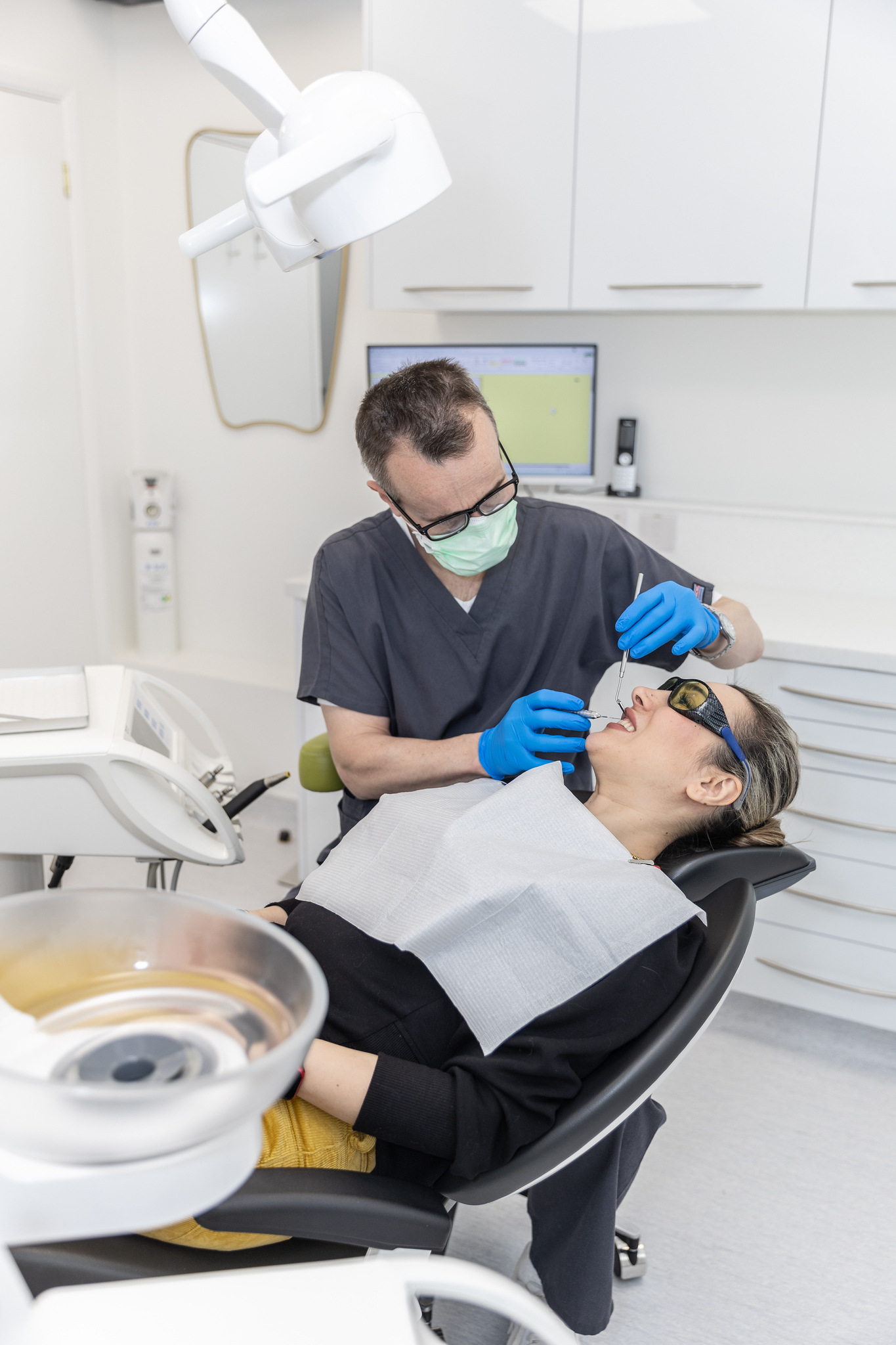
- Protection for vulnerable roots, shielding them from decay, enamel wear, and further tissue loss.
- Significant reduction in tooth sensitivity to hot, cold, sweet, or acidic foods and drinks.
- Enhanced smile aesthetics by correcting uneven gum lines and reducing an overly long-toothed appearance.
- Stabilisation of the supporting bone and underlying tissues to help keep your natural teeth secure.
- Expert specialist care from a dedicated periodontist providing tailored treatment and detailed aftercare.
What are the benefits of treating gum recession?
Protective
Uncovering the root surfaces leaves teeth vulnerable. Treatment rebuilds or stabilises the tissue barrier to protect against decay.
Relieving
By covering exposed roots, you seal off the microscopic pathways that transmit sudden, painful shocks from hot or cold foods.
Lasting
Addressing the root cause of gum recession early prevents severe bone loss and safeguards your natural teeth for years to come.
Customised
From gentle, deep-cleaning hygiene therapies to microscopic gum grafting, treatments are completely designed around your mouth.
Non-surgical gum therapy
If your gum recession is identified in its earlier stages or is caused by active gum disease (periodontitis), non-surgical care is often our first line of defence. This tailored treatment focuses on deep professional cleaning, commonly known as root surface debridement or scaling. It is designed to remove the hardened bacterial deposits (tartar) that have collected beneath the receding gum line.
During the procedure, our specialist team works with gentle, high-precision instruments to thoroughly clear away plaque and smooth out the tooth roots. By creating a perfectly clean and smooth surface, we make it much easier for your remaining gum tissue to heal, tighten, and reattach firmly to the teeth. This halts the recession process, protects your bone structure, and establishes a healthy, stable foundation that blocks future bacterial damage.
Microsurgical gum grafting
Imagine restoring the natural protective frame your smile once had. If your gum recession is advanced, leaving the tooth roots highly exposed or visually uneven, a microsurgical gum graft can be a highly predictable and gentle solution. This delicate technique involves taking a small amount of healthy tissue, either from the roof of your mouth or from a specialised donor matrix and carefully placing it over the area where the gums have shrunk away.
Our specialist periodontist carries out this procedure under high-magnification loupes using micro-instruments and incredibly fine sutures. This microscopic precision ensures the graft is positioned beautifully to blend seamlessly with your natural gum line. Not only does this technique dramatically reduce post-operative healing times and discomfort, but it also effortlessly covers exposed roots, eliminates pain from hot and cold beverages, and completely revitalises the aesthetics of your smile.
Specialist periodontal maintenance
Preventing gum recession from returning requires a dedicated, proactive approach to your oral health. Our periodontal maintenance programme is a continuous care framework tailored to patients who have experienced tissue loss or gum sensitivity. Because receding gums leave delicate areas of the tooth exposed, standard cleanings are often not enough to maintain a healthy baseline.
When you visit us for maintenance, our specialist hygienists use ultra-gentle, state-of-the-art techniques to clean deep into any vulnerable areas without causing irritation. We also work closely with you to adjust your home care routine, advising you on the best soft-bristled brushes, specialised techniques, and protective toothpastes. This ensures you aren’t accidentally accelerating recession through aggressive brushing, keeping your gums stable, safe, and entirely free from inflammation.
Frequently Asked Questions
Gum recession can happen for a few different reasons. Quite often, it is caused by periodontal (gum) disease, where bacteria gradually dissolve the supporting tissues. However, it can also happen to people with excellent oral hygiene due to over-aggressive brushing with a hard toothbrush, genetic thinness of the gum tissue, clenching or grinding your teeth, or uneven pressure from a misaligned bite.
Unfortunately, once gum tissue has pulled away or been lost, it cannot grow back naturally on its own. However, the good news is that we can successfully stop the recession process from getting any worse. For areas where significant tissue has been lost, modern treatments like gum grafting can beautifully rebuild and restore the lost gum line to protect your teeth.
We do everything we can to ensure your absolute comfort. The entire procedure is carried out under a highly effective local anaesthetic, meaning you will not feel a thing while we work. Post-treatment, any mild tenderness or swelling is completely normal and can be easily managed with standard over-the-counter pain relief. Because we use advanced microsurgical techniques, tissue trauma is kept to an absolute minimum, ensuring a smooth and rapid recovery.
The most common initial sign is a sudden, sharp sensitivity to hot, cold, or sweet foods and drinks, because the sensitive root of the tooth is losing its protection. You might also look in the mirror and notice that a specific tooth looks significantly longer than its neighbours, or you might feel a small, distinct notch or ridge in the tooth right at the gum line.
The most important step you can take at home is to switch to an extra-soft or electric toothbrush with a pressure sensor to ensure you aren't scrubbing the delicate tissue away. Brush gently at a 45-degree angle, making sure not to saw back and forth. Combining this gentle technique with regular flossing and booking routine visits with our specialist team will keep the plaque bacteria at bay and keep your gums firmly in place.