Why have a bridge?
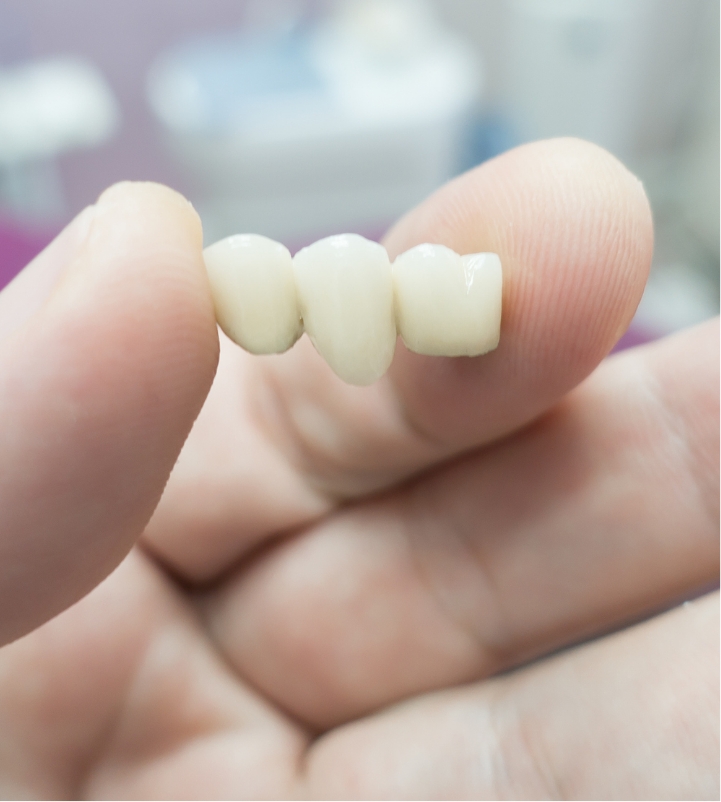
It is important to replace missing teeth in your smile, not just because it can really affect confidence. Replacing teeth prevents the remaining teeth from shifting out of position, causing alignment issues. It also protects the otherwise vulnerable gums.
Bridges are a more secure alternative to partial dentures as they are fixed. We can also use a bridge in combination with implants to replace more than one missing tooth.
Frequently Asked Questions
You need to clean your bridge every day, to prevent problems such as bad breath and gum disease. You also have to clean under the false tooth every day. Your dentist or hygienist will show you how to use special floss, as a normal toothbrush cannot reach.
The main alternatives to bridges for replacing missing teeth are partial dentures and dental implants. Bridges are seen as a more secure alternative to partial dentures, as they are fixed into place and will not move or slip. Implants are seen as superior in durability and aesthetics but are more expensive. Bridges can be used in combination with implants to replace more than one missing tooth.
The most common type is the traditional bridge, anchored by crowns on healthy teeth on either side of the gap. Other types include cantilever bridges (used when only one adjacent tooth is available) and Maryland bonded bridges (a more conservative option for front teeth, using wings to adhere to the back of surrounding teeth). Implant-supported bridges are another option, using dental implants for support instead of neighbouring teeth.
The cost of a dental bridge can vary depending on several factors, such as the number of teeth being replaced and the materials used. We can give you a personalised estimate for your specific case during a consultation appointment.