All-on-4 vs All-on-6 Dental Implants
11 June 2026
For many patients struggling with failing teeth, loose dentures, or extensive dental problems, full-mouth implant treatment can feel genuinely life-changing. Very often, the conversation is about far more than aesthetics alone. Patients want to eat comfortably again, speak with confidence, stop worrying about loose dentures moving, and simply regain confidence in everyday life.
At Implant & Perio Clinic in Marylebone, near Harley Street, one of the most common questions patients ask is:
“What is the difference between All-on-4 dental implants and All-on-6?”
The terminology itself can be slightly confusing because patients are often led to believe these are completely different treatments, when in reality the planning is usually far more individual and nuanced than that. Broadly speaking, both approaches refer to full-arch implant restorations where a full set of teeth is supported by dental implants. The number simply refers to how many implants are being used to support the bridge. However, the number of implants alone does not necessarily determine how the final teeth will feel, look or function.
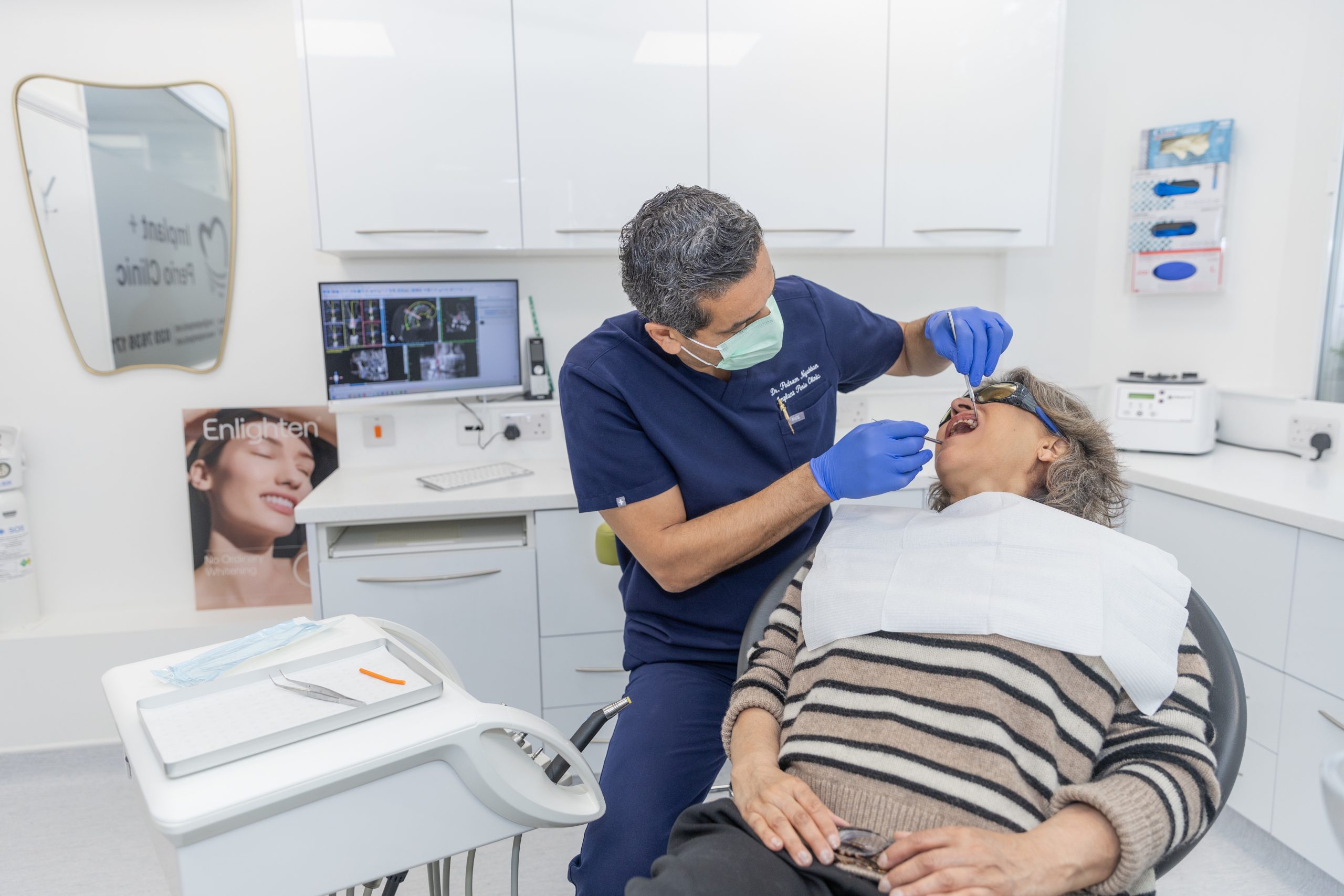
One of the biggest misconceptions is the idea that All-on-4 automatically means a bulky denture-like restoration covering the palate, whilst All-on-6 automatically means fixed bridgework without palatal coverage. In reality, the design of the final restoration depends on many different factors:
Some fixed full-arch bridges supported by four implants may still feel very natural and have no palatal coverage at all. Equally, some patients with more significant tissue loss may require additional acrylic or gum support within the design of the restoration, regardless of the number of implants used. This is why treatment planning should never be reduced simply to “four versus six implants”. What matters far more is whether the final restoration is biologically stable, maintainable, comfortable and appropriate for that individual patient over the long term. Where bone quality and anatomy allow, additional implants can sometimes provide greater flexibility within the prosthetic design and force distribution. For certain patients, this may allow a more bridge-like feel with less bulk overall.
Many patients describe fixed full-arch restorations without palatal coverage as feeling more natural when eating because the roof of the mouth remains uncovered. For some, speech adaptation can also feel easier. However, not every patient is automatically suitable for every design. Patients who grind heavily, have severe bone loss, advanced gum disease or complex bite issues may require different approaches to improve long-term predictability and stability. This is one of the reasons I feel strongly that full-mouth implant treatment should never be viewed purely as cosmetic dentistry. The long-term success of implant treatment depends not only on how the teeth look initially, but also on:
One of the most important conversations we have with patients is around long-term maintenance. Implants still require lifelong care. Regular hygiene maintenance appointments, yearly reviews, radiographs where necessary, and monitoring of the surrounding tissues remain extremely important long after treatment has been completed.

In practice, some of the most challenging situations we see are not failed surgery itself, but restorations that have become difficult to clean or maintain over time. At Implant & Perio Clinic, treatment planning always begins with careful clinical assessment rather than choosing a treatment concept based purely on terminology or trends. Some patients may be better suited to four implants. Others may benefit from six, or from a more customised staged rehabilitation depending on their anatomy, function and long-term goals.
Ultimately, the best implant dentistry is rarely about simply placing the greatest number of implants possible. It is about creating treatment that remains healthy, comfortable, maintainable and stable for many years afterwards.
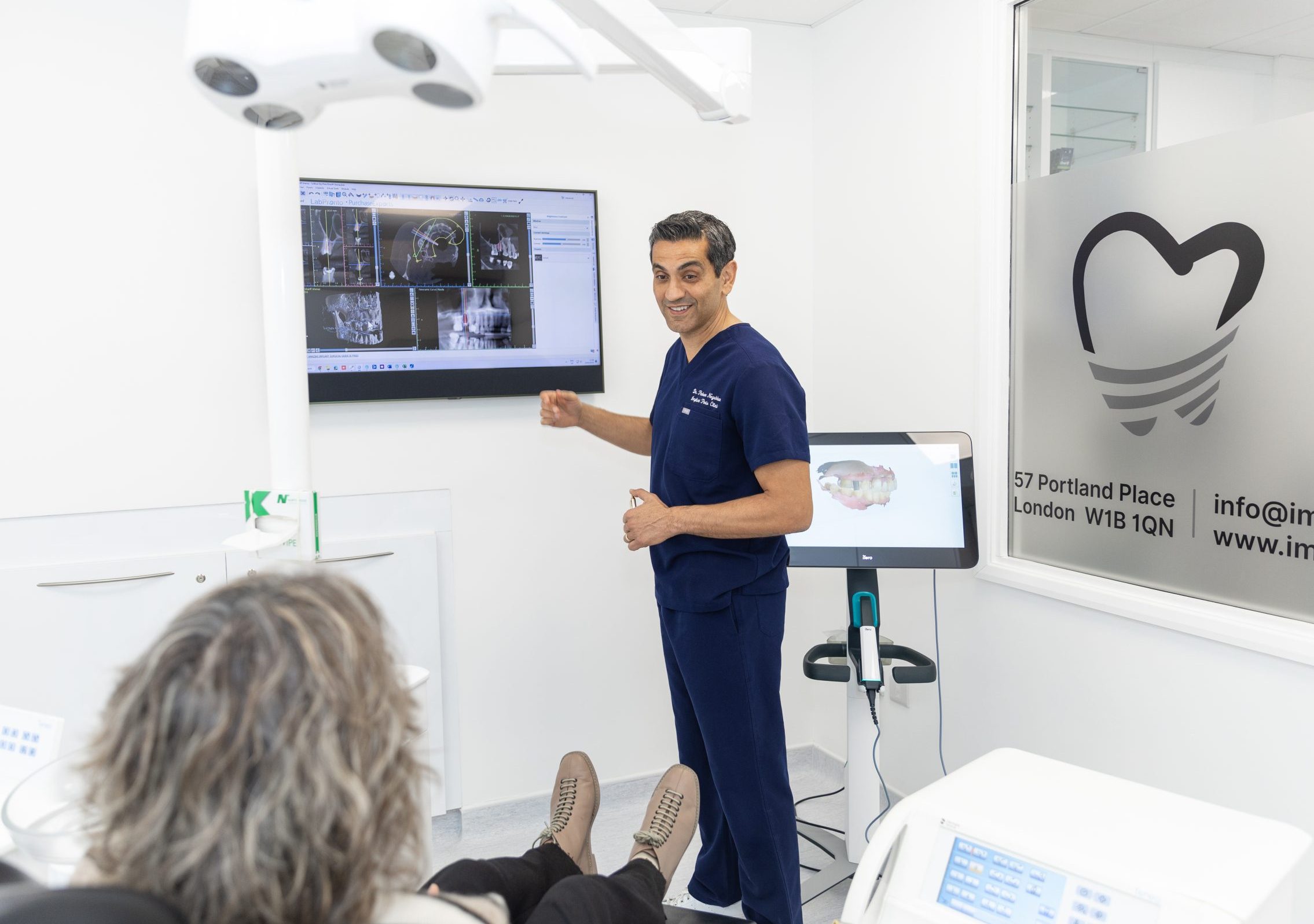
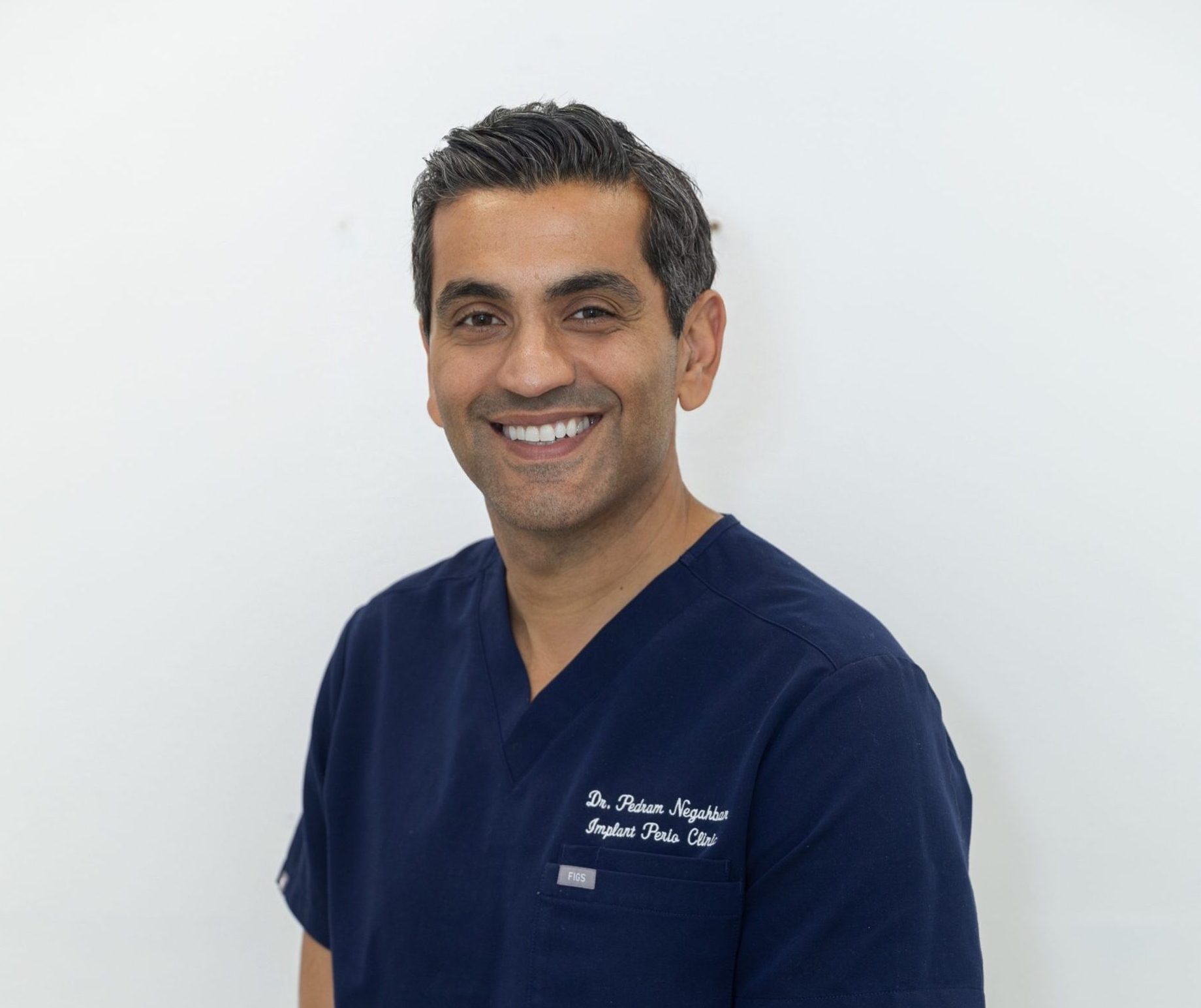
Dr Pedram Negahban is a Principal Dentist at Implant & Perio Clinic on Portland Place in Marylebone, near Harley Street, London. He has more than 23 years of clinical experience and a particular interest in dental implants, restorative dentistry and complex treatment planning. Patients often seek his opinion when facing significant decisions about their oral health, and he is known for his thoughtful, long-term approach to care.
Implant & Perio Clinic is located at Implant & Perio Clinic, Portland Place, Marylebone, near Harley Street, London W1